First consignment arrives in Bengaluru under India‑UK CETA
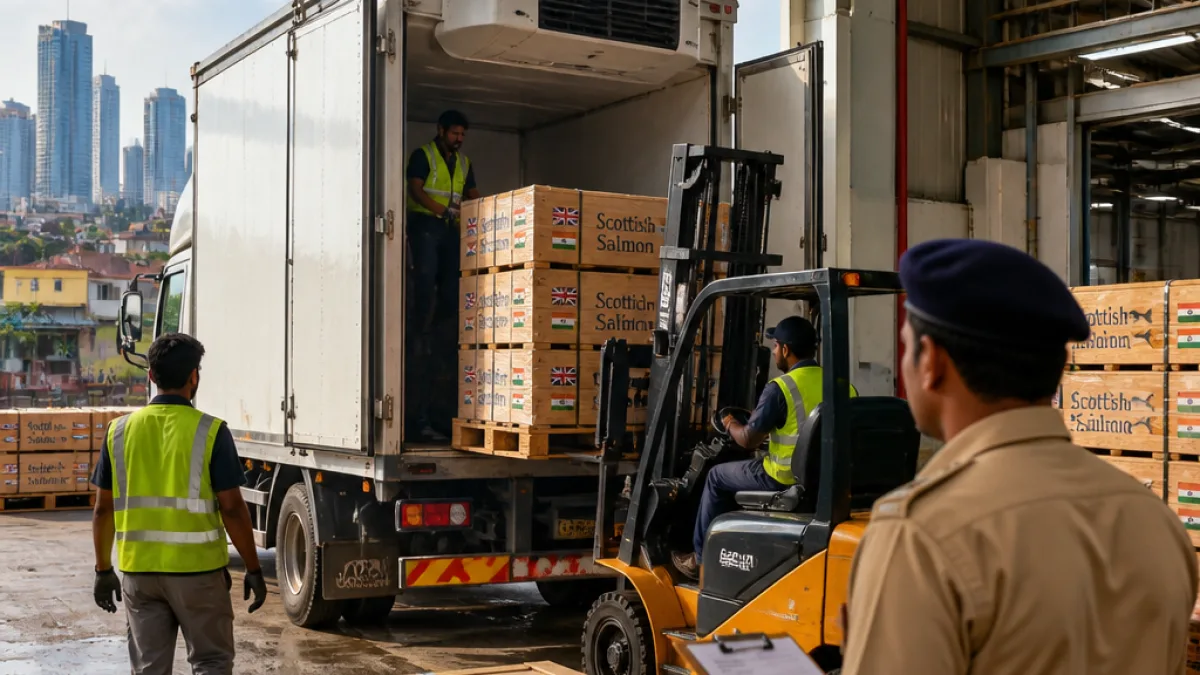
Bengaluru on Friday received the first duty‑free shipment of Scottish salmon to enter India under the India‑UK Comprehensive Economic and Trade Agreement (CETA), an early trade milestone that local importers and British officials described as an opening for premium seafood in the city’s market.
The consignment was brought into the city by Sashimi Foods Private Limited and contains fresh Scottish salmon produced by Bakkafrost Scotland. The shipment arrived roughly two weeks after the CETA came into force, removing a previously applied 33 per cent import duty on Scottish salmon.
“The arrival of this shipment is an encouraging sign of the trade agreement’s early success,” said Owen Richards, Deputy Head of Mission at the British Deputy High Commission in Bengaluru.
Trade and market implications for Bengaluru
Removal of the import duty is expected to make premium imported salmon more accessible to consumers and businesses in Bengaluru, including high‑end restaurants, hotels and speciality retailers that source fresh seafood. Officials and the exporter have characterised the consignment as one of the first tangible outcomes of the bilateral trade pact aimed at strengthening commercial ties between India and the United Kingdom.
- Importer: Sashimi Foods Private Limited (Bengaluru)
- Producer: Bakkafrost Scotland
- Previous import duty: 33% → Now: 0%
Scale and outlook cited by officials
The British mission highlighted that the agreement should create new market opportunities for UK producers. A statement accompanying the arrival noted estimates that Scotland’s salmon industry could gain about £130 million over the next 10 years as a result of improved access to the Indian market.
India is identified among large global seafood markets, and while most consumption remains domestically sourced, demand for premium imported seafood has been rising in major urban centres. The duty remission on Scottish salmon is intended to support that trend by lowering landed costs for importers and, potentially, retail prices for consumers.
| Item | Detail |
|---|---|
| Agreement | India‑UK Comprehensive Economic and Trade Agreement (CETA) |
| Product | Scottish salmon (fresh) |
| Importer | Sashimi Foods Private Limited, Bengaluru |
| Producer | Bakkafrost Scotland |
| Import duty before/after | 33% → 0% |
Potential benefits and immediate questions
For Bengaluru businesses that cater to affluent diners and consumers seeking international fare, duty reduction could reduce costs and broaden sourcing options. Importers may be able to offer a wider range of premium products, while hospitality establishments could incorporate Scottish salmon into menus with better margins.
At the same time, local market participants will observe how logistical costs, cold‑chain reliability and distribution margins affect final retail prices. Removal of customs duty lowers one component of landed cost, but freight, handling, refrigeration and wholesale mark‑ups will continue to shape consumer prices in Bengaluru.
Officials and industry participants described the shipment’s arrival as an early test case for the agreement’s operational impact. If importers in Bengaluru and other Indian cities can scale duty‑free supplies reliably, traders say it could create steady demand that benefits Scottish producers and Indian retailers alike.
The consignment to Bengaluru marks a practical start to a trade feature that policymakers say will deepen commercial ties and open new business opportunities between the two countries.