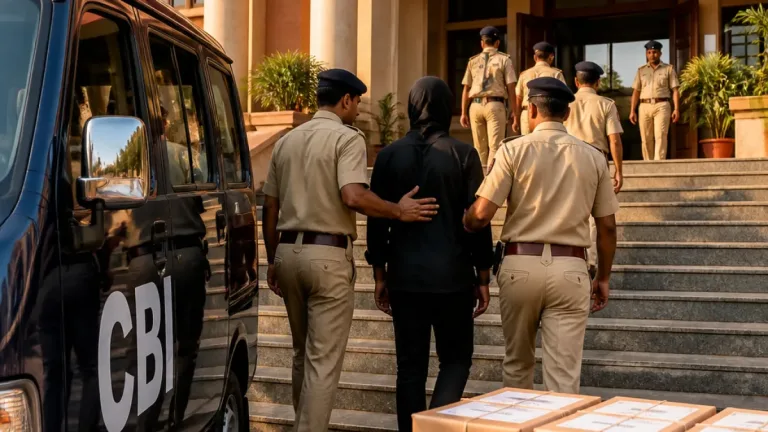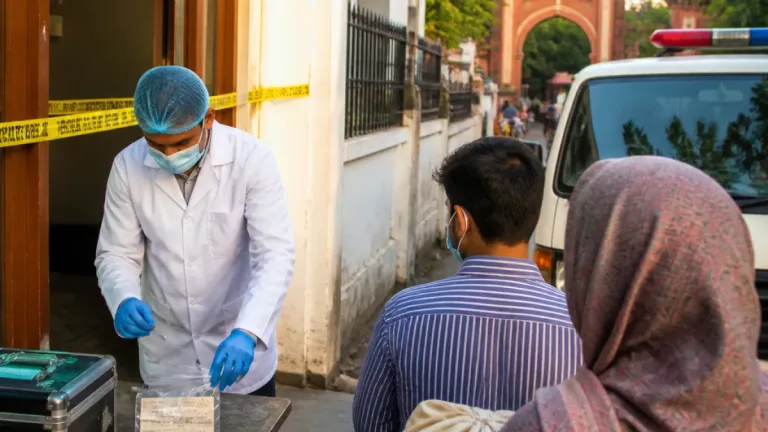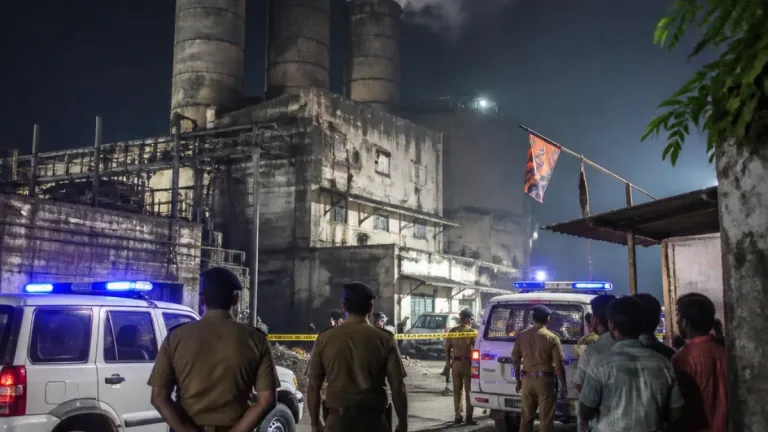
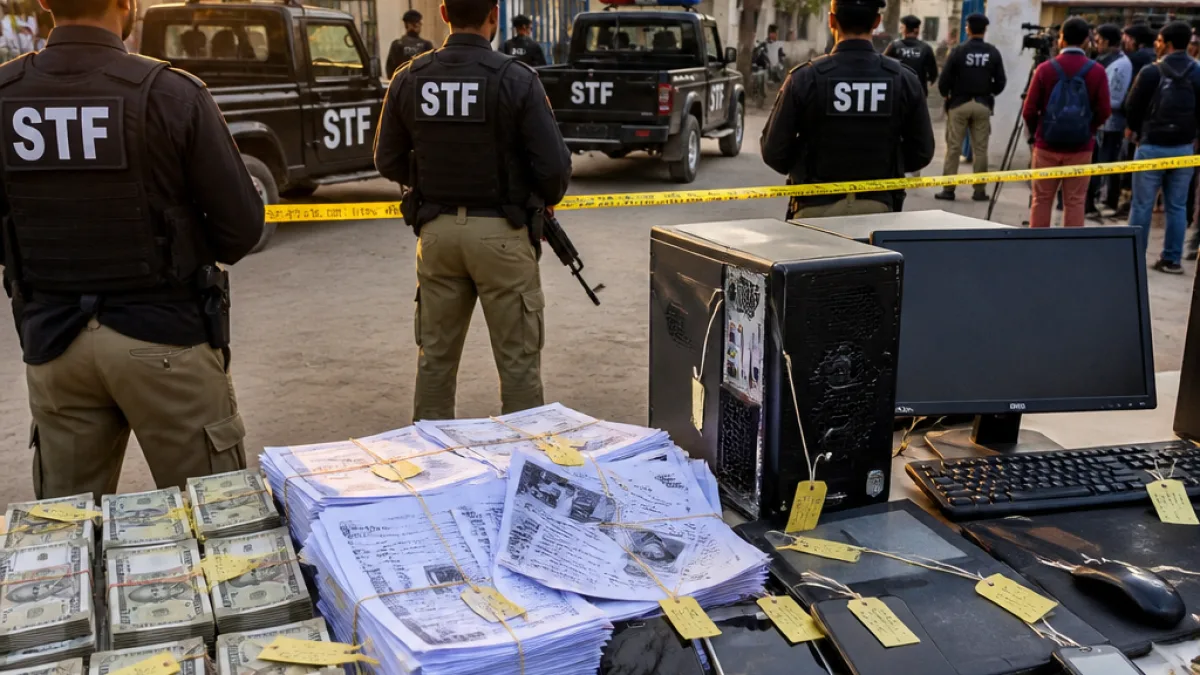
The Uttar Pradesh Special Task Force (STF) arrested 11 people, including the principal of a government Industrial Training Institute (ITI), after a raid on an examination centre in Naini on Wednesday, the agency said. The action followed allegations that paid impersonators were made to sit the computer-based All India Trade Test (AITT) in place of registered candidates.
Arrests and accused
The STF said those taken into custody include the ITI principal, identified as Ashok Kumar, the centre's examination in-charge Ravi Prakash, five alleged solvers and four instructors. The solvers named by the agency are Shivam Kumar, Ranvijay Singh, Jai Singh, Jitendra Patel and Dileep Kumar. The instructors arrested are listed as Phool Prakash, Dheeraj Kumar, Rajesh Kumar and Rajkumar Maurya. A case has been registered at Naini police station.
What the STF recovered
During the raid at the Government ITI where the computer-based theory component of the AITT was underway, the STF said it seized a range of material allegedly used to facilitate impersonation and payment.
- Cash: Rs 5.10 lakh recovered in the raid, plus ₹16,370 found on the accused during personal searches.
- Examination paraphernalia: photocopies of five admit cards and documents related to the test.
- Computer equipment: five monitors, five CPUs, five keyboards and five mice.
- Mobile phones: six Android handsets.
| Item | Quantity |
|---|---|
| Cash (raid) | ₹5.10 lakh |
| Cash (on accused) | ₹16,370 |
| Admit card photocopies | 5 |
| Computer monitors / CPUs / keyboards / mice | 5 each |
| Mobile phones | 6 |
How the racket allegedly operated
An STF officer said the agency received information that during the multi-shift computer-based tests — being conducted in three shifts from July 11 to August 8 — centre staff were accepting money from candidates and arranging for other persons, described as solvers, to take the examinations on their behalf.
According to the STF, examination in-charge Ravi Prakash told investigators that he had been appointed by the principal and that candidates judged weak were asked to pay for substitution. The accused allegedly seated the solvers in a separate room to take the test instead of the rightful applicants.
Investigation and next steps
The STF’s Prayagraj unit carried out the raid on a tip-off and arrested the accused following searches and interrogation. The agency said it recovered the items listed above and has forwarded the case to the Naini police for further legal processing. The investigation will focus on the scope of the racket, amounts exchanged and whether the malpractice extends to other centres or officials.
Registering an FIR at the local police station is the first formal step towards prosecution; the accused may face charges that include fraud, forgery and criminal conspiracy depending on the evidence gathered.
Background and wider implications
The alleged scheme revives longstanding concerns in Uttar Pradesh and elsewhere about paid cheating in public and vocational examinations and the role of insiders in facilitating malpractice. Computer-based tests, while designed to reduce human intervention, remain vulnerable when centre personnel collude with candidates or third parties.
Vocational training through ITIs forms a crucial part of skill development and employability programmes. Any erosion of credibility in certification can affect students’ job prospects and undermine public confidence in government-run training institutions.
Practical fallout for examinees
Candidates who sat at the Naini centre may face delays in result processing if the authorities decide to nullify or re-conduct affected sessions. Individuals who believe they were wrongly replaced or who have information relevant to the probe are likely to be summoned to assist investigators, the STF indicated.
The case is being closely watched by education authorities and law-enforcement agencies as an example of how examination security must be tightened at centre level, particularly during multi-shift computer-based testing.
Further developments, including chargesheet filings and administrative action against implicated officials, will determine the longer-term outcome of the probe.