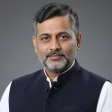
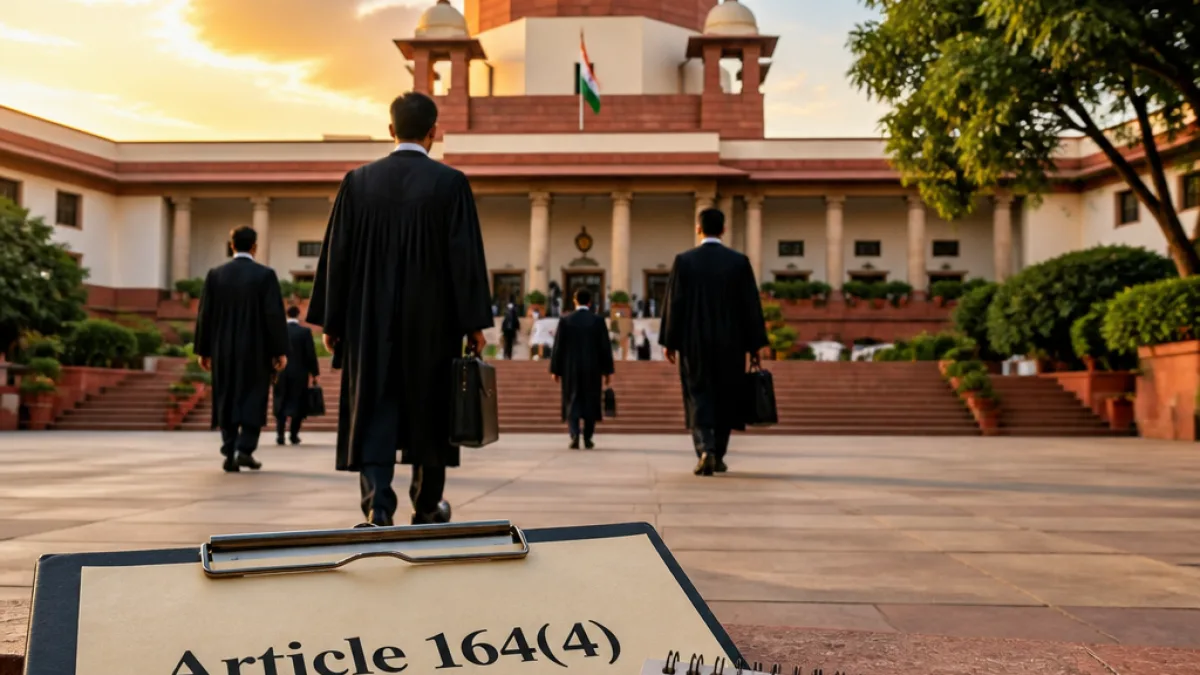
NEW DELHI: The Supreme Court on Thursday questioned the Bihar government over the continued appointment of Panchayati Raj Minister Deepak Prakash, asking how he was being kept in office beyond the six-month period permitted under Article 164(4) of the Constitution when he is not an elected member of the state legislature.
Bench raises constitutional point
A three-judge Bench headed by Chief Justice of India Surya Kant heard a request to list a petition challenging Prakash's second appointment to the state cabinet. The Bench described the matter as a "pure question of law" and pressed the state to explain the legal basis for the minister's continued tenure.
"It is a pure legal issue. How are you retaining a minister beyond 6 months when he is not elected?" CJI Surya Kant asked the counsel for the Bihar government.
Counsel for the state told the court the matter was already listed for hearing on 27 August and left it to the Bench. The petitioner, social activist Rakesh Kumar Singh, urged urgent consideration, saying "it is now over six months and he continues as a minister." The petitioner further submitted that "seven months and 22 days have passed, and he is still continuing as the minister."
Factual timeline cited in petition
The petition challenges the continued use of the six-month exception in circumstances where the same Legislative Assembly continued to exist but the minister was reappointed after a change in government. According to the petition as placed before the court:
- 20 November 2025 — Deepak Prakash was first inducted into the Bihar cabinet despite not being a member of either the Legislative Assembly or the Legislative Council.
- 15 April 2026 — The Nitish Kumar government fell.
- 7 May 2026 — Prakash was reappointed as Panchayati Raj minister in the new government headed by Chief Minister Samrat Choudhary.
| Date | Event |
|---|---|
| 20 Nov 2025 | First induction of Deepak Prakash as minister (not a legislator) |
| 15 Apr 2026 | Collapse of Nitish Kumar government |
| 7 May 2026 | Reappointment of Deepak Prakash in new cabinet |
Legal issue: whether six-month period resets
The petitioner contends the six-month concession under Article 164(4) — which permits a person who is not a member of the legislature to be appointed a minister for a maximum of six consecutive months provided they get elected within that period — is a one-time allowance that cannot be restarted by reappointment, changes in government or cabinet reshuffles during the life of the same Legislative Assembly.
In support, the plea relies on earlier Supreme Court jurisprudence including the 2001 judgment in S.R. Chaudhari v. State of Punjab, which the petitioner cites to argue the provision cannot be invoked repeatedly to extend an unelected person's ministerial tenure.
Proceedings and next steps
The state informed the Bench that it had sought time to file a counter-affidavit when the matter was earlier mentioned on 15 July but had not yet filed it. The Bench said the state must explain how the minister remained in office beyond the six-month period without being elected.
No final order was passed on Thursday; the court has listed the matter for further hearing on the scheduled date of 27 August, as indicated by the state's counsel.
Implications for Bihar governance
The case raises questions about the practice of appointing unelected individuals to ministerial posts and the limits of the constitutional exemption. If the court accepts the petitioner's argument, it could require the state to either ensure that the minister secures election within the original six-month window or vacates the office, potentially impacting portfolios and the composition of the cabinet.
The issue also spotlights procedural aspects: whether a change of government mid-Assembly can effectively restart the constitutional clock for an unelected minister or whether the original appointment date governs the six-month limit.
As the matter proceeds, the court's interpretation of Article 164(4) in this context will be closely watched by political parties and constitutional law observers in Bihar and across India.
Chandan Kumar is a correspondent reporting from Bihar.