Stricter penalties, fast-track trials and task forces among key measures
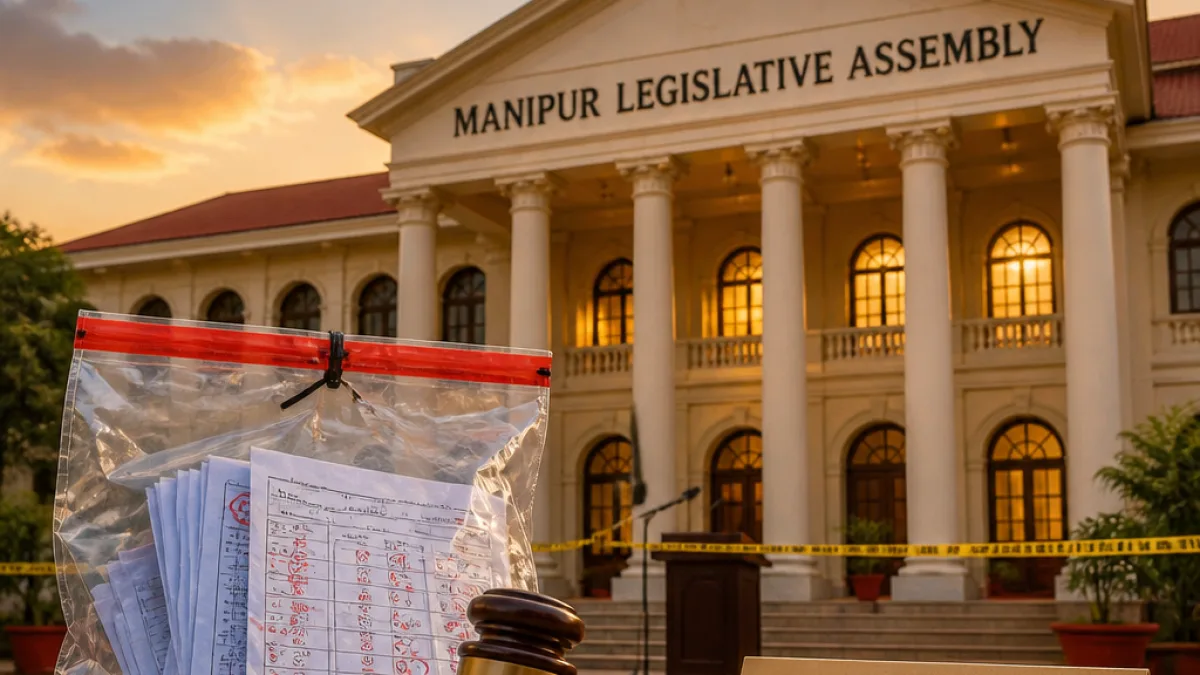
Imphal: Manipur Chief Minister Yumnam Khemchand Singh on Thursday described Parliament’s approval of amendments to the anti-paper leak law as a “landmark step” towards establishing a more credible public examination system and protecting the aspirations of students. The legislation — the Public Examination (Prevention of Unfair Means) Amendment Bill, 2026 — was cleared by both Houses of Parliament this week.
The amended law increases the severity of punishments for those found involved in leaking question papers or using other unfair means during examinations. Under the new provisions, offenders face jail terms ranging from a minimum of five years to a maximum of 10 years, along with fines of up to ₹50 lakh. For organised criminal activity connected with paper leaks, the Bill prescribes a minimum sentence of seven years and a fine of not less than ₹10 crore.
"This reform strengthens the integrity of examinations and protects the aspirations of millions of students," Singh said in a social media post late on Thursday.
The amendments also provide administrative and procedural mechanisms intended to speed up the investigation and trial of offences. State governments and Union Territory administrations are empowered to designate any court of session as a special fast-track court to try cases under the law. Proceedings in such courts are to be continued on a day-to-day basis, and trials are to be completed within three months from the filing of the charge sheet.
Additionally, the Bill allows the central government to constitute a special task force to investigate offences under the Act. The 2024 law was enacted amid widespread controversies over paper leaks; before that, there was no specific substantive statute dealing with unfair means involving entities conducting public examinations on behalf of the central government.
Officials have argued that the stricter penal provisions and procedural safeguards will act as a deterrent and provide for faster disposal of cases, thereby reducing disruption to students’ careers. The Bill was passed by the Lok Sabha earlier in the week and cleared the Rajya Sabha on Thursday by a voice vote, even as several Opposition parties staged a walkout.
The changes are likely to affect examinations held by central agencies and bodies as well as those conducted by state authorities if they engage in processes governed by the Act. The provision to empanel fast-track courts aims to shorten the time between filing of the charge sheet and final adjudication, addressing concerns that drawn-out legal processes deny timely remedies and justice.
Legal experts and education administrators in Manipur will be watching implementation details closely, including how states designate fast-track courts and whether the central task force’s powers will be exercised in coordination with local police and state investigative agencies. The Bill also raises operational questions for examination bodies about security protocols, question paper handling, and chain-of-custody measures that will need reinforcement.
For students and parents in the state, the law’s stricter regime promises a more secure examination environment on paper. However, the practical impact will depend on enforcement, inter-agency coordination and the timely completion of trials in designated courts.
Below is a summary of the principal changes introduced by the amendment:
- Minimum jail term of 5 years and up to 10 years for individuals involved in paper leaks or unfair means.
- For organised crimes linked to paper leaks: minimum 7 years imprisonment and at least ₹10 crore fine.
- Empowerment of states/UTs to designate special fast-track courts for trial of offences, with trials to be completed within 3 months of charge-sheet filing.
- Provision for a central special task force to investigate offences under the Act.
| Issue | Provision in Amendment |
|---|---|
| Individual offenders | 5–10 years jail; fine up to ₹50 lakh |
| Organised criminal involvement | Minimum 7 years jail; fine not less than ₹10 crore |
| Trial mechanism | Special fast-track courts; day-to-day proceedings; trial within 3 months |
| Investigation | Central government may constitute a special task force |
Manipur's Chief Minister linked the reform to broader national efforts to strengthen the education ecosystem under the central government’s leadership. The amendments respond to a public demand for stronger action after a spate of high-profile leaks in recent years, and signal an intent to tighten legal and procedural controls over exam management.
Implementation and outcomes will be key to assessing whether the legislative changes translate into tangible improvements in exam security and fairness. For stakeholders in Manipur — students, schools, universities and examination boards — the coming months will be critical as authorities prepare to operationalise the new measures and review existing security frameworks.