Supreme Court directed to share NFSU report after Centre says recordings were altered
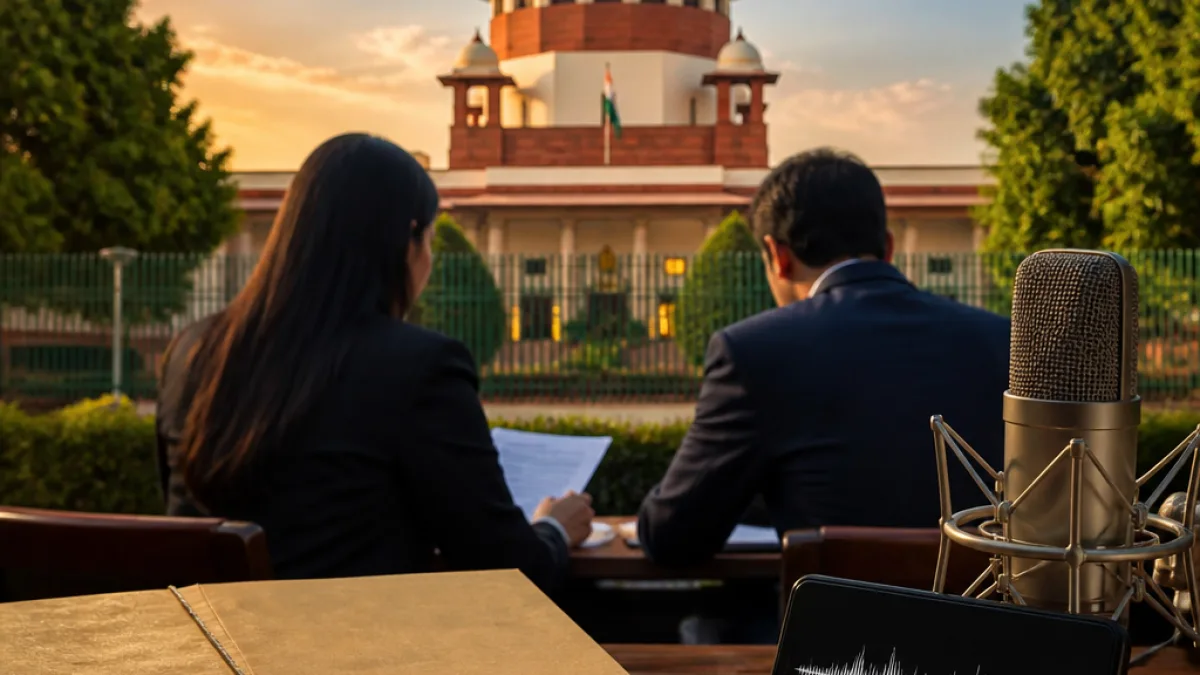
NEW DELHI: The Centre told the Supreme Court on Friday that audio recordings purportedly implicating former Manipur chief minister N. Biren Singh in the state’s ethnic violence were manipulated, and produced a forensic finding to that effect in the course of hearings before a bench of the apex court.
Additional Solicitor General Aishwarya Bhati told Justices Sanjay Kumar and Sanjiv Sachdeva that the forensic laboratory’s examination showed the recordings contained multiple alterations. The bench ordered that a six-page forensic report prepared by the National Forensic Sciences University (NFSU) be supplied to both the petitioner and the Centre’s counsel.
“This is clearly manipulated,” Aishwarya Bhati said, according to court proceedings.
The petition in question was filed by the Kuki Organisation for Human Rights, which is seeking an investigation into a set of audio clips that have been circulated as allegedly linking Mr Biren Singh to incidents of ethnic violence in Manipur. Advocate Prashant Bhushan, appearing for the petitioner, referenced a separate report by a private forensic laboratory, Truth Labs, which had concluded with over 93% certainty that the voice in the recording was that of Mr Biren Singh.
What the court ordered
The bench directed that the latest NFSU report be made available to both the petitioner and the Centre’s legal team. The court’s order mandates exchange of the forensic findings to enable parties to examine the basis for competing forensic opinions and to decide further course of action in the writ petition.
The submissions before the court indicate a clash between two forensic assessments: the Truth Labs analysis asserted a high degree of confidence that the voice belonged to Mr Biren Singh, while the NFSU report, cited by the Centre, identified signs of tampering.
Implications for the case and public interest
The court’s direction to share the NFSU document is aimed at ensuring transparency in a matter that touches on allegations about responsibility during a period of intense communal tension in Manipur. For residents and stakeholders in the state, the forensic findings are likely to influence perceptions of accountability and the legitimacy of evidence being relied upon in public debate.
- Parties involved: Kuki Organisation for Human Rights (petitioner), Centre (respondent), former Chief Minister N. Biren Singh (individual implicated in audio), Truth Labs and NFSU (forensic assessments).
- Court action: Supreme Court ordered supply of NFSU’s six-page report to both petitioner and Centre.
- Forensic dispute: Private lab reported >93% match to the former CM’s voice; NFSU reportedly found multiple alterations.
What is on record
Court records show the Centre urged dismissal of the writ petition, with its counsel asserting the recordings were not authentic. The bench’s procedural order to circulate the NFSU findings ensures that both sides will have access to the same document prior to further hearings, allowing the petitioning side to respond to the Centre’s assertions and forensic conclusions.
| Item | Reported position |
|---|---|
| Truth Labs forensic report | Concluded with over 93% certainty that the voice matched N. Biren Singh |
| NFSU forensic report | Found multiple alterations in the recordings (as stated by Centre in court) |
| Supreme Court order | Directed supply of NFSU’s six-page report to petitioner and Centre |
The matter is being watched closely in Manipur where allegations and evidence related to the years of unrest have substantial political and social ramifications. For affected communities, the authenticity of such audio material could shape demands for investigation, redress and policy responses.
Process ahead
With the NFSU report now to be shared, the petitioning group will have the opportunity to rebut the Centre’s claim of manipulation or to seek further independent analysis. The course of legal proceedings will depend on whether the court finds the forensic conclusions sufficient to accept or reject the petition’s factual assertions, or whether it directs further forensic or investigative steps.
No final judicial determination on the authenticity of the recordings or on any related allegations of culpability has been recorded yet. The Supreme Court’s order to exchange forensic material is a procedural step that could lead to further hearings once both sides have considered the contents of the NFSU document.
Further updates will follow as the court proceeds and parties file responses to the NFSU findings.