Hyderabad: Telangana is likely to experience a weaker second half of the southwest monsoon, with rainfall during August and September expected to be normal to below normal, the India Meteorological Department (IMD) has indicated. The outlook comes after the state received widespread showers in July that largely averted an early-season deficit.
July respite followed by subdued outlook
In July, Telangana recorded 224.3 mm of rainfall against the long‑period normal of 227.4 mm, providing widespread relief despite prevailing El Niño conditions over the equatorial Pacific. However, IMD's tercile probability maps point to a higher probability of below‑normal rainfall over parts of northern, western and southern Telangana for the remainder of the southwest monsoon.
August shows mixed picture
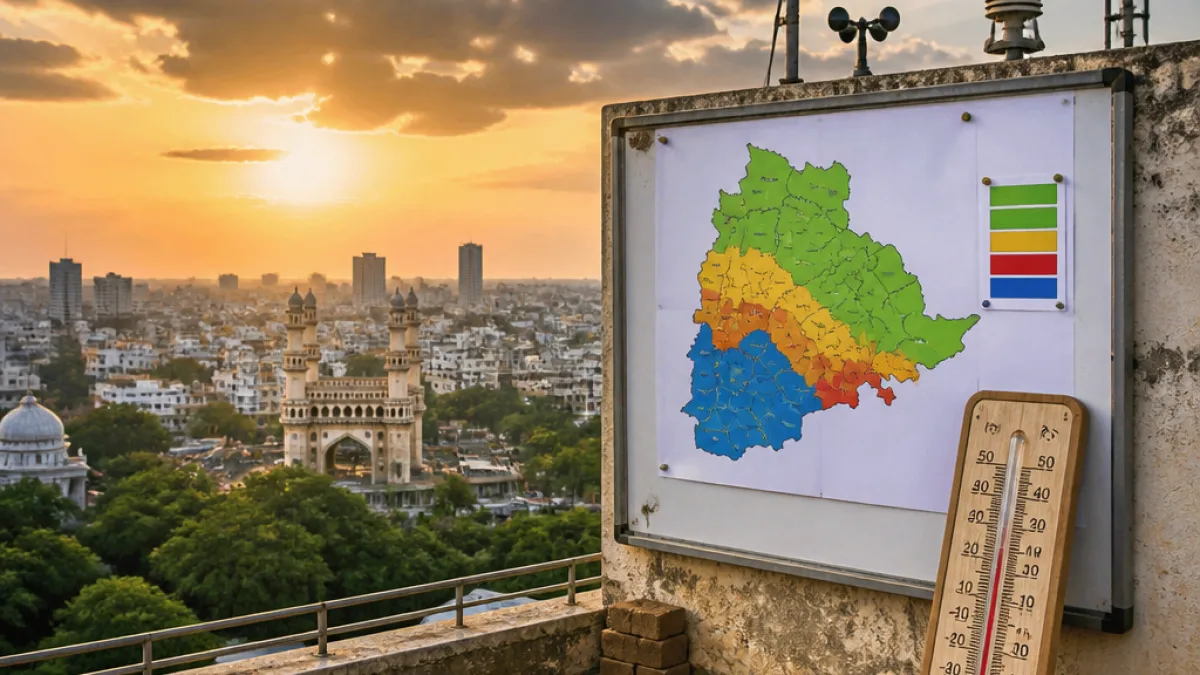
The monthly outlook for August is regionally mixed. IMD has forecast normal to above‑normal rainfall for parts of north, east and northeast Telangana, while many western and southern districts are likely to receive normal to below‑normal precipitation. Forecasters also expect both daytime maximums and night‑time minimums to remain above normal in August, increasing the probability of humid and uncomfortable conditions, notably during breaks in rainfall.
| Parameter | Reported / Forecast |
|---|---|
| July rainfall (Telangana) | 224.3 mm (normal 227.4 mm) |
| Aug–Sep statewide outlook | Normal to below‑normal (regional variation) |
| National second‑half monsoon | Expected <94% of Long Period Average (LPA) |
El Niño and broader drivers
At the national level, IMD projects that rainfall for the second half of the southwest monsoon (August–September) is likely to remain below the Long Period Average, with total seasonal rainfall expected to be less than 94% of the usual average. The subdued outlook is attributed in part to a strengthening El Niño event, which IMD's coupled climate model suggests will intensify during the latter part of the monsoon and can suppress rainfall across large swathes of India.
Meanwhile, the Indian Ocean Dipole (IOD) currently remains in neutral phase, according to the forecast summary. The combination of a strengthening El Niño and neutral IOD is one factor behind a less favourable rainfall outlook for many regions, including parts of Telangana.
Implications for agriculture, water and heat stress
A shift to normal or below‑normal rainfall during August and September could have several local implications. Farmers who benefited from early widespread showers in July may face increased risk if planned kharif activities receive limited follow‑up rains. Reservoir inflows and groundwater recharge typically rely on the sustained performance of the second half of the monsoon; a weaker finish could constrain water availability in some districts later in the season.
Warmer daytime and night‑time temperatures run the risk of raising heat stress and humidity, particularly during dry spells. Public health and local administrations may need to prepare for higher discomfort levels, while vulnerable groups and outdoor workers could face increased exposure to heat and humidity.
Practical considerations for residents and authorities
- Farmers: consider contingency plans for irrigation and crop protection if follow‑up rains are limited; monitor district agricultural advisories.
- Water managers: assess reservoir and tank levels, accelerate water conservation and recharge measures where feasible.
- Health and labour departments: prepare guidance and safeguards for outdoor workers during periods of high humidity and elevated night temperatures.
IMD updates and district‑level advisories will determine local responses as the season progresses. State authorities and line departments typically use IMD outlooks to plan short‑term measures; stakeholders are advised to follow official releases for precise, localised forecasts and warnings.
Reporting from Hyderabad.