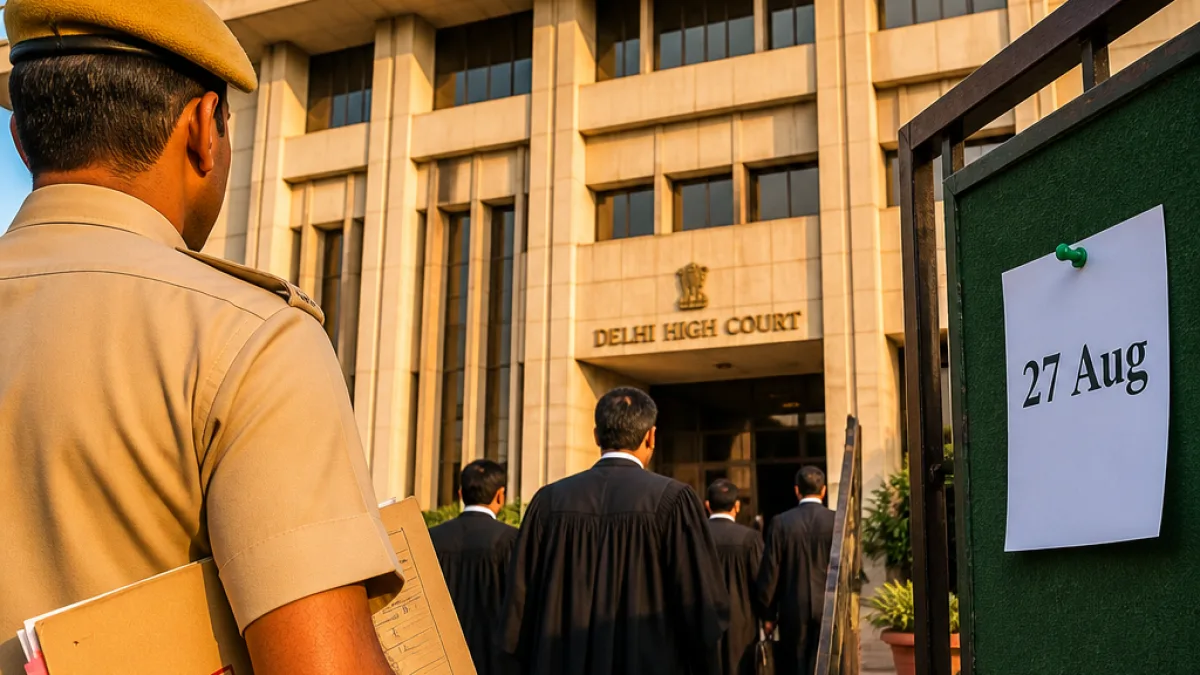
The Delhi High Court on Friday directed the Delhi Police to file its response within two weeks to a fresh bail petition filed by activist Umar Khalid in the Unlawful Activities (Prevention) Act (UAPA) case connected to the alleged larger conspiracy behind the February 2020 north-east Delhi riots. A bench of Justices Prathiba M Singh and Vikas Mahajan issued notice and listed Khalid's plea for hearing on August 27, the same date on which the bail application of co-accused Sharjeel Imam is slated.
Bench issues notice, asks police to respond
The high court bench asked the police to place their reply on record within a fortnight. Additional Solicitor General S V Raju, representing the Delhi Police, informed the court that the trial court had rejected Imam's bail plea as well, and suggested that both matters could be taken up together.
Khalid's counsel told the court that this is his third bail application since arrest and that he was also seeking interim bail. The plea challenges a trial court order dated July 4, which refused Khalid's earlier bail petition.
Case background and charges
Khalid was arrested in September 2020 and is accused under the UAPA of being among the alleged masterminds of the February 2020 riots that left 53 people dead and more than 700 injured. The violence erupted amid demonstrations over the Citizenship (Amendment) Act, 2019 and the National Register of Citizens. The larger conspiracy case is being probed by the Delhi Police Special Cell.
Other individuals named in the alleged conspiracy include Sharjeel Imam, Khalid Saifi and former AAP councillor Tahir Hussain, among others, according to court records.
Earlier judicial rulings
The trial court's July 4 order, which declined Khalid's bail, cited the Supreme Court's directive of January 5 and said it had "no option but to follow" that higher court direction. A division bench of the Delhi High Court had earlier denied Khalid bail on September 2, 2025, and the Supreme Court subsequently upheld that refusal on January 5, while granting relief to some co-accused in separate rulings.
"no option but to follow"
Next steps and wider implications
With the high court issuing notice to the police, counsel for the parties will now await the police response and the August 27 listing. The consolidation of Khalid's and Imam's pleas for a joint hearing could affect the pace of judicial consideration in the case that has been under trial for several years.
- Notice issued: Delhi High Court to Delhi Police; two-week timeframe for reply.
- Next hearing: August 27 — Khalid and Sharjeel Imam matters listed together.
- Charges: UAPA; alleged role in February 2020 north-east Delhi riots.
Timeline of key dates
| Date | Event |
|---|---|
| February 2020 | North-east Delhi riots; 53 dead, 700+ injured |
| September 2020 | Umar Khalid arrested and charged under UAPA |
| September 2, 2025 | Delhi High Court division bench denied Khalid bail |
| January 5 | Supreme Court upheld earlier refusal of bail (year as reported) |
| July 4 | Trial court dismissed Khalid's bail plea |
| August 27 | High Court listed to hear Khalid and Imam bail pleas |
Legal and public interest context
The case continues to draw attention for its legal contours and implications for bail jurisprudence in UAPA matters. UAPA prosecutions involve a stringent standard for grant of bail because of the special statute's object and the court's approach to national security and conspiracy allegations. Observers have noted that procedural developments in high-profile cases such as this often shape wider debates on detention, due process and the balance between rights and security in criminal trials.
The high court's decision to synchronise the hearing dates for Khalid and Imam may allow the bench to consider common envelopes of evidence and legal submissions relating to the alleged conspiracy. The court's directions will be monitored closely by defence teams, prosecutors and civil liberties groups as the case advances.
Ahead of the August hearing, the immediate procedural requirement is the police response to the fresh bail application. The high court will decide on admissibility and the merits of Khalid's petition after examining the material placed on record and submissions of the parties.