XLRI hosts industry-academia dialogue on consulting’s future
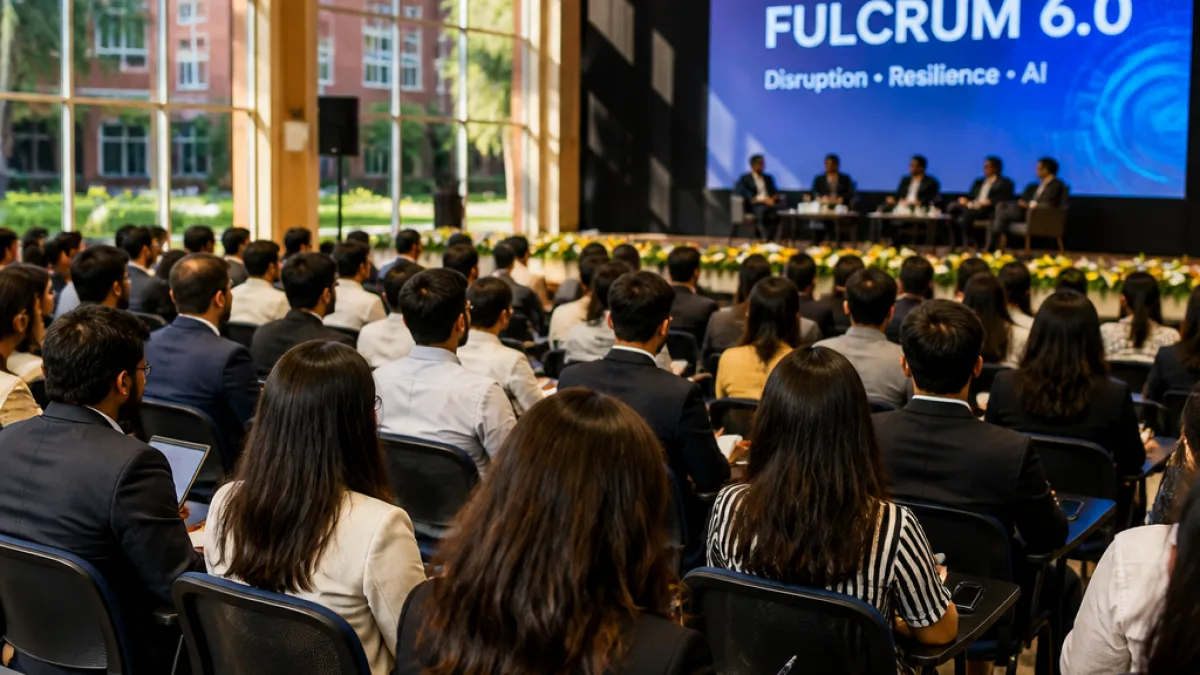
Jamshedpur: XLRI – Xavier School of Management in Jamshedpur concluded FULCRUM 6.0, a focused conclave that convened consulting professionals, corporate executives and faculty to discuss how the sector should respond to disruption, build resilience and adopt strategic transformation.
The event, organised by the XLRI PGDM (GM) programme, featured a sequence of panel discussions addressing rapidly changing priorities in consulting practice and education. The organisers described the theme as:
“Navigating Disruptions, Resilience, and Strategic Transformation in the Consulting Industry.”
Sessions combined perspectives from global consulting networks, technology and professional services firms along with academic viewpoints. Panels explored the role of professional judgement when information is abundant, and debated whether generative artificial intelligence represents an existential threat or the greatest opportunity for consulting so far.
Panels and participants
The conclave assembled a cross-section of senior industry figures. Participants included leaders from multinational consultancies, tech-enabled service firms and strategy practices.
- Panel on Judgement in the Age of Information Overabundance featured executives such as Ajit Pai (EY), Anup Gandhi (Alvarez & Marsal), Inder N. Dua (Infosys Consulting), Shantanu Singh (Accenture) and others who underlined the continuing importance of experience and discernment alongside data-driven advice.
- Panel on Generative AI as a Disruptor included speakers such as Amitayu Roy (Accenture Strategy & Consulting), Prakash Dwivedi (EY), Priyadarshi Majumdar (Genpact) and representatives from IBM Consulting, PwC and ZS, who discussed AI’s potential to transform consulting models and client engagement.
Panel moderators and session chairs guided debate on practical consequences for consulting careers and firm strategy, emphasising that tools and platforms will change how advice is generated, validated and delivered.
Key discussion threads and local relevance
Speakers repeatedly returned to two linked themes: the limits of data without context, and the need for consultants to build judgement through diverse client exposure. Several panellists noted that while algorithmic tools accelerate analysis, interpretative skill — honed in real client environments — remains central to professional value.
On generative AI, discussants presented a range of views: some characterised the technology as a major opportunity to scale insights and improve productivity, while others flagged risks around accuracy, ethical use and the potential displacement of routine advisory work. The presence of senior practitioners from firms active in India underscored the immediate relevance for consulting teams and aspirants in Jamshedpur and the wider Jharkhand region, where management education institutions such as XLRI shape local career pathways.
| Panel | Representative speakers |
|---|---|
| Judgement under information abundance | Ajit Pai, Anup Gandhi, Inder N. Dua, Shantanu Singh, others |
| Generative AI — threat or opportunity | Amitayu Roy, Prakash Dwivedi, Priyadarshi Majumdar, representatives from IBM, PwC, ZS |
Implications for students and the consulting sector
Organisers positioned the conclave as an opportunity for students to engage with current industry dilemmas and for firms to scout talent that combines analytical fluency with judgment shaped by experience. For Jamshedpur’s management students, the discussions highlighted the importance of practical exposure, interdisciplinary learning and ethical awareness as AI tools become common in project delivery.
Event organisers said the exchange between experienced practitioners and young managers aimed to bridge academic curricula with on-ground consulting practices. The conclave’s format of moderated panels and Q&A sought to encourage actionable takeaways rather than abstract theorising.
By hosting FULCRUM 6.0, XLRI reiterated its role as a platform for debate on the evolving business and professional services landscape. The discussions at Jamshedpur are likely to inform both hiring practices and course content as consultancies and business schools adapt to technological change.