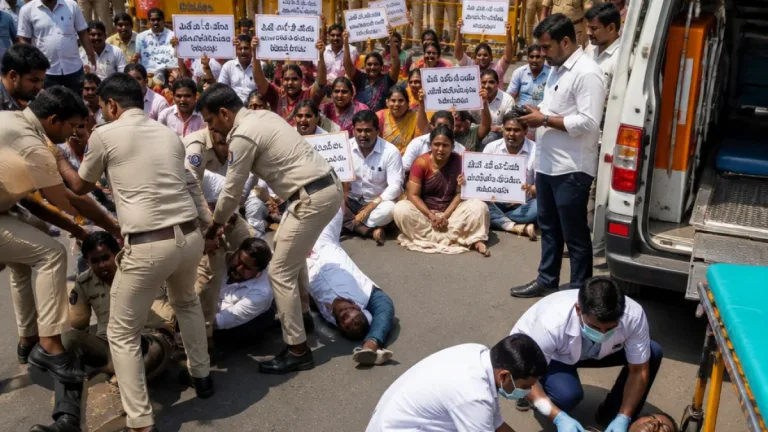
Ranchi: The Congress in Jharkhand on Thursday declared its support for students agitating here over alleged irregularities in the Jharkhand Public Service Commission (JPSC) and Jharkhand Staff Selection Commission (JSSC) examinations, and said securing justice for the aspirants is a priority.
Party leaders meet Chief Minister, welcome ministerial panel
Congress in-charge for Jharkhand K. Raju led state party leaders to meet Chief Minister Hemant Soren and hand over a memorandum relating to the protests, party sources said. Raju said the delegation thanked the Chief Minister for constituting a Ministerial Committee to consult protesting students and recommend concrete solutions.
"Justice for our students remains our top priority," K. Raju said on X, underlining the party's public support for the agitation.
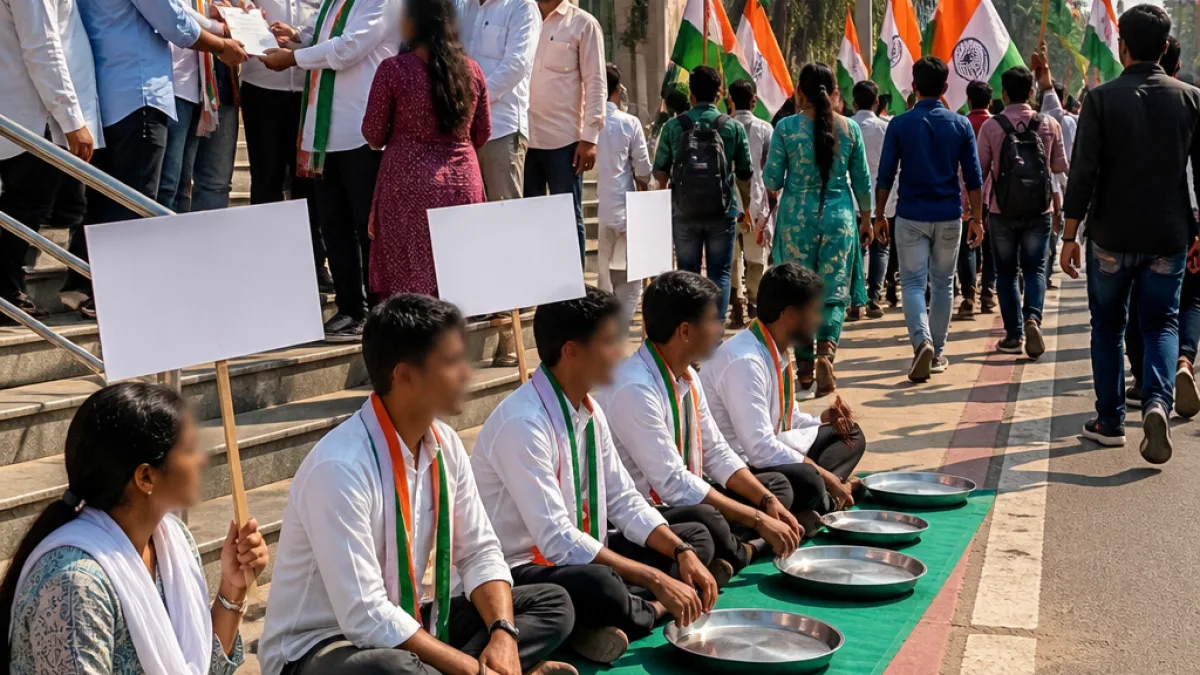
The students' movement, which began on July 25 at Jaipal Singh Munda Stadium, has gained momentum in Ranchi and escalated into nationwide attention. Demonstrators have been demanding cancellation of the 14th JPSC Civil Services Examination and an independent probe into alleged irregularities.
Escalation on the ground: hunger strike and Tiranga march
Protesters intensified their agitation this week. Student leader Divendranath Mahato began a hunger strike and, by one report, five demonstrators had joined an indefinite fast to press their demands. On Wednesday, hundreds of students marched from Jaipal Singh Munda Stadium to Albert Ekka Chowk carrying an estimated 600-metre-long national flag in a Tiranga March, despite heavy rain.
- Students are pressing for cancellation of all JPSC and JSSC exams held during the Hemant Soren-led government's tenure.
- They demand an independent probe by the Central Bureau of Investigation (CBI), rejecting a state CID investigation.
- They seek comprehensive reforms in Jharkhand's recruitment and competitive-examination system.
Organisers instructed participants to maintain discipline and avoid abusive language, seeking to keep the protests peaceful and to distinguish the student-led movement from other political demonstrations in the city.
Local implications and official response
The Congress statement and meeting with the Chief Minister represent a notable political engagement with the protesters' demands. The formation of a ministerial committee signals the state government's intent to consult with students, although details on the committee's membership, mandate and timeline were not disclosed in the statements released so far.
| Event | Detail |
|---|---|
| Protest launch | July 25 at Jaipal Singh Munda Stadium, Ranchi |
| Hunger strike | Divendranath Mahato and four others on indefinite fast |
| Tiranga March | Hundreds marched to Albert Ekka Chowk, carrying a long national flag |
| Political action | Congress leaders met CM Hemant Soren; ministerial committee constituted |
Chief Minister Hemant Soren, addressing the wider issue of alleged paper leaks on Wednesday, described such incidents as part of a national problem and offered to hold talks to resolve the standoff. The students, however, have insisted on a CBI inquiry instead of probe by the state's Criminal Investigation Department (CID), which they said they do not trust.
The movement has emerged as one of the largest student-led agitations in Jharkhand in recent years, drawing participation from the Jharkhand IYC, NSUI and other student bodies who attended rallies in the state capital. While the Congress has publicly aligned with the demonstrators, the protesters have maintained that their movement is student-led and aimed at systemic reforms.
For Ranchi residents, the protests have meant sustained gatherings at central city locations and heightened attention on recruitment processes that affect thousands of aspirants across the state. The outcome of the ministerial committee's consultations and whether the state government will accede to calls for an external CBI probe remain central to resolving the impasse.
Further developments are expected as the Ministerial Committee begins consultations with the students and as the agitating groups decide on next steps in case their principal demands are not met.