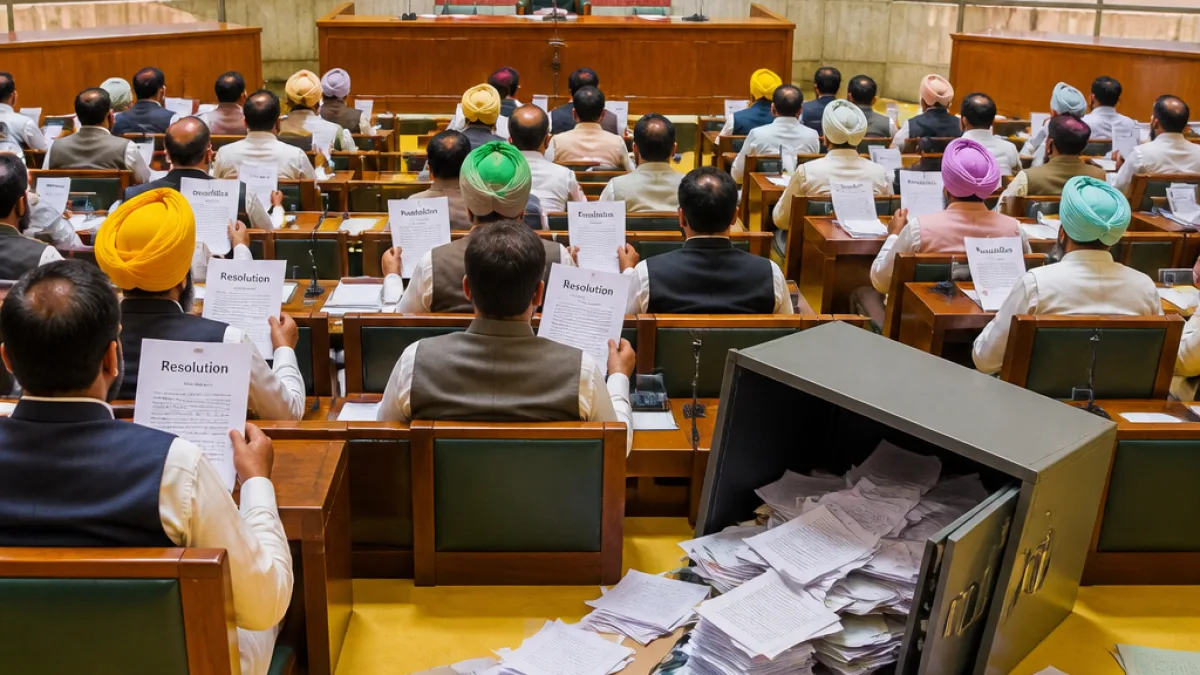
Chandigarh: The Punjab Assembly on Monday unanimously adopted a condemnation resolution against the Narendra Modi-led Union government alleging repeated paper leaks, recruitment irregularities and excessive police action against protesting students, the House recorded on the opening day of the monsoon session.
Resolution moved, opposition benches absent
Finance Minister Harpal Singh Cheema moved the resolution, criticising the Centre for what he described as systemic failures in the public examination and recruitment ecosystem. The motion was carried in the Vidhan Sabha in the absence of Congress and BJP MLAs.
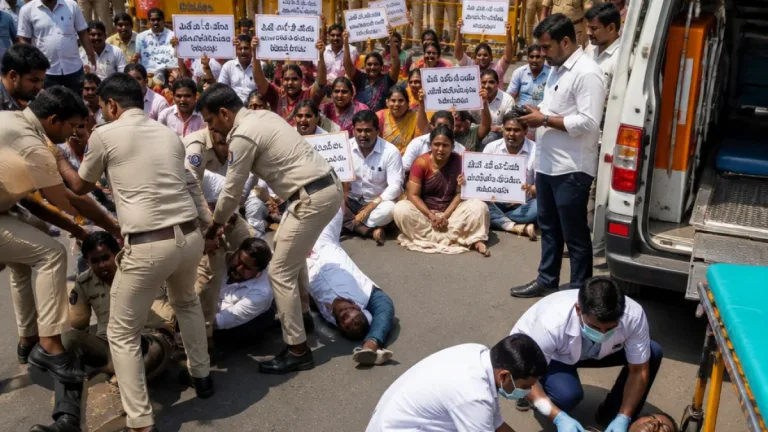
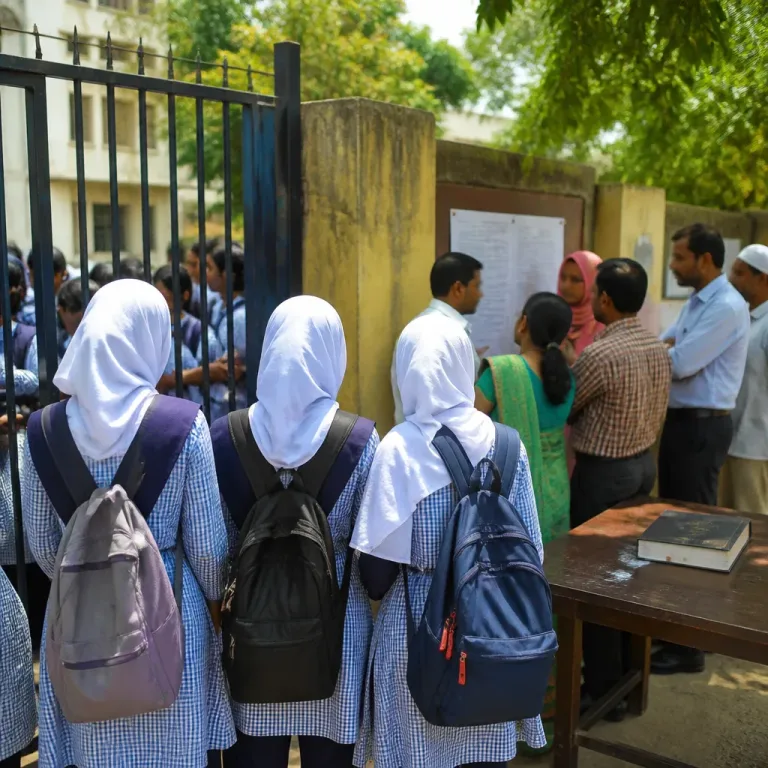
Chief Minister Bhagwant Mann participated in the discussion and strongly condemned the use of force against students who staged protests at Delhi’s Jantar Mantar, saying young protesters had faced “atrocities”. Mann also reiterated a figure that, he said, showed the scale of the problem: that a total of 93 exam papers had leaked since 2014 in states governed by the BJP.
The resolution expressed “grave concern” about repeated failures in the examination and recruitment processes under the Union government and several BJP-ruled states, saying such incidents had compromised meritocracy and jeopardised the futures of millions of aspirants.
“The House expresses grave concern over the repeated failures of the public examination and recruitment system under the BJP-led Union government and various BJP-governed states, marked by recurring paper leaks, examination fraud, recruitment irregularities, and administrative failures that have compromised meritocracy and jeopardised the future of millions of young aspirants.”
Allegations of force and detentions
Members said protests by students seeking accountability had been met with “excessive police action, arbitrary detentions, criminal proceedings, and the use of force”. The resolution also criticised the “arbitrary detention” of environmentalist and education reformer Sonam Wangchuk, saying he was detained while showing solidarity with fasting students demanding answers over paper leaks.
Education Minister Harjot Singh Bains recalled visiting Jantar Mantar during the student demonstrations and described the police response as “brutal”, asserting that the youths present were patriotic and seeking reform rather than acting against the country.
Calls for structural reform
The House urged the Centre to undertake a comprehensive restructuring of the public examination ecosystem. The resolution also demanded withdrawal of FIRs lodged against protesting students and called for an inclusive education commission involving all stakeholders to safeguard merit and transparency.
During the debate, the Assembly cited reports of more than 70 examination scandals over the past decade, encompassing paper leaks, remote-access hacks and recruitment scams, and said these incidents had seriously eroded public confidence in fair recruitment.
| Allegation / Figure | Reported number / description |
|---|---|
| Exam papers claimed to have leaked since 2014 (as cited by CM) | 93 |
| Examination scandals over the past decade (House statement) | More than 70 |
- Action urged: Comprehensive restructuring of the public examination system by the Union government.
- Remedy sought: Formation of an education commission with all stakeholders and withdrawal of FIRs against student protesters.
- Solidarity: House members expressed support for students and criticised the use of force at protests.
Political context and local response
The resolution was backed across the House, including by Akali Dal (Waris Punjab De) leader Manpreet Singh Ayali, who supported the AAP government’s motion. The debate underscored the political salience of examination integrity and youth grievances ahead of scheduled recruitment drives and tests that affect large numbers of aspirants in Punjab.
While the Assembly’s measures are advisory to the Centre, the resolution puts formal pressure on the Union government to respond to allegations of systemic lapses and to consider remedial steps. The demand for an independent, inclusive mechanism reflects continuing public anxiety about the security and fairness of competitive examinations nationwide.
The House record shows the matter had garnered cross-party attention in Punjab, with government members highlighting both the impact on aspirants’ careers and the civic rights dimensions raised by student protests. The Vidhan Sabha concluded the debate by urging the Union government to accept the need for institutional reforms and greater accountability in public examinations.
Reporting from Chandigarh.