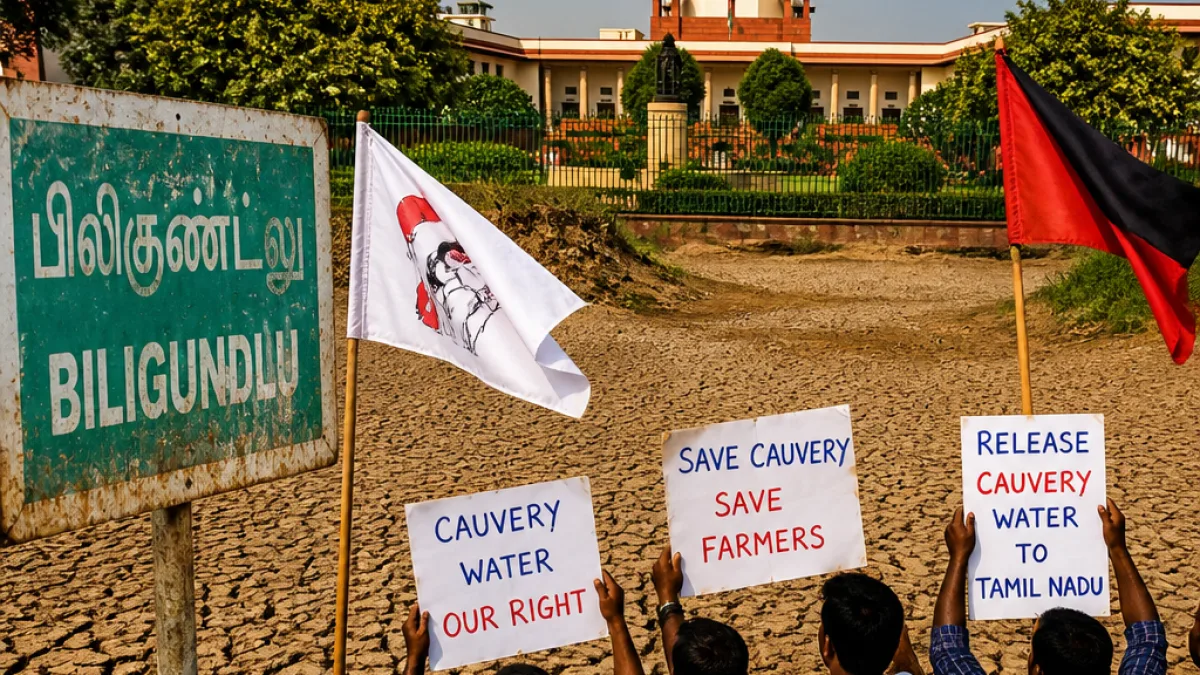
New Delhi / Chennai: The Dravida Munnetra Kazhagam (DMK) on Saturday approached the Supreme Court seeking directions to the Karnataka government to immediately release Cauvery water to Tamil Nadu, saying the state must comply with the apex court’s 2018 verdict and recent orders of the Cauvery Water Management Authority (CWMA).
Petition seeks enforcement of CWRC and CWMA directions
The party’s petition asks the top court to direct Karnataka to implement the Cauvery Water Regulation Committee's (CWRC) recommendation, which the CWMA affirmed on July 30, 2026, to ensure a flow of 3,500 cusecs per day at the inter-state border point of Biligundlu for a period of 15 days.
"Direct the State of Karnataka / Respondent No. 1 to forthwith and fully implement the direction of the CWRC dated July 28, 2026, as affirmed by the CWMA on July 30, 2026, by ensuring a flow of 3,500 cusecs per day at Biligundlu for the period of 15 days commencing from date of the order passed by this Hon'ble Court, and to make good the shortfall in compliance from July 29, 2026 onwards," the DMK said in its plea.
In addition to immediate releases, the DMK sought an order directing Karnataka to clear the accumulated shortfall in water releases to Tamil Nadu, quantified in the petition as about 9.46 TMC (thousand million cubic feet) due at Biligundlu as on July 26, 2026.
Relief measures requested
- Immediate release of 3,500 cusecs per day at Biligundlu for 15 days.
- Directions to Karnataka to make good the accumulated backlog of 9.46 TMC by ensuring releases such that roughly 7,000 cusecs per day are realised at Biligundlu over a 15-day period.
- Orders requiring the CWMA to monitor day-to-day reservoir releases in Karnataka and the flows realised at Biligundlu and to file compliance reports before the court.
Context and legal footing
The DMK’s petition frames its case on two pillars: the Supreme Court’s 2018 Cauvery verdict and the CWMA’s recent affirmation of the CWRC recommendation. The party asked the court to ensure immediate compliance with the administrative directions and to remedy the shortfall that it says has arisen since July 29, 2026.
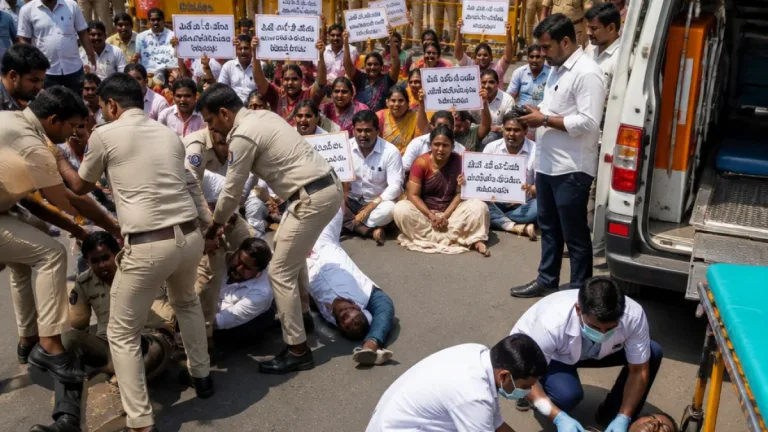
The move follows fresh tensions between Karnataka and Tamil Nadu over sharing Cauvery waters during the current monsoon season. On Thursday the CWMA had upheld the CWRC recommendation that Karnataka release the specified daily quantum to Tamil Nadu, setting off protests and political mobilisation in both states.
Political response in Karnataka
The filing comes amid demonstrations and resistance in Karnataka to the release order. Chief Minister D.K. Shivakumar appealed on Saturday to organisations opposing the water release to withdraw their proposed agitation, signalling concern in the neighbouring state over implementation of the CWMA direction.
Practical implications for Tamil Nadu
If the court grants the relief sought and Karnataka complies, Tamil Nadu would expect augmented river flows at Biligundlu that could ease water availability for irrigation and other uses in the Cauvery basin. The petition highlights both the immediate 15-day release window and a proposed compensatory release to address the backlog.
| Item | Quantity / Period |
|---|---|
| Daily release ordered by CWRC/CWMA | 3,500 cusecs per day for 15 days |
| Accumulated shortfall claimed by DMK | 9.46 TMC as on July 26, 2026 |
| Proposal to clear shortfall | Releases such that ~7,000 cusecs per day are realised at Biligundlu over 15 days |
The DMK has urged the Supreme Court both to enforce the CWMA direction and to mandate active monitoring of compliance by the CWMA itself—requests that, if accepted, would keep the inter-state water flows under direct judicial oversight in the near term.
Next steps
The matter will be considered by the Supreme Court after the petition is listed; the timeline for a hearing will be determined by the court registry. Any order by the apex court would add a judicial layer to the administrative direction already issued by the CWMA.
The Cauvery dispute has long been a flashpoint between Tamil Nadu and Karnataka, with legal, political and agrarian consequences in both states. The DMK’s plea seeks immediate technical and judicial enforcement to convert administrative directions into on-ground flows at Biligundlu.
Reporting from Chennai and New Delhi.