
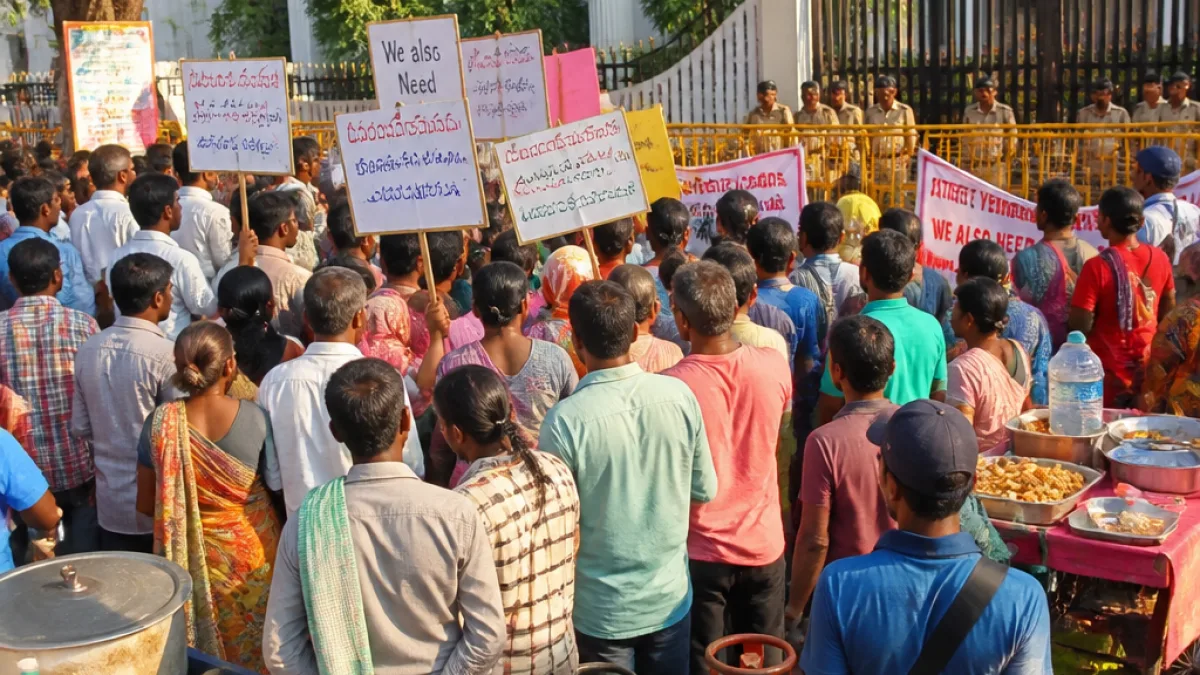
Vendors assemble at Collectorate, oppose zoning and raids
Vijayawada: Street vendors from Besant Road and nearby areas staged a demonstration outside the District Collectorate on Monday, pressing the government to halt ongoing evictions and withdraw the zoning restrictions they say are harming livelihoods, the Centre of Indian Trade Unions (CITU) said.
Addressing the protest, CITU district vice-president Donepudi Kasinath alleged that successive administrations provide favourable terms to large corporations while ignoring vendors who depend on daily earnings. He said authorities have been conducting raids, seizing LPG cylinders used by food vendors and subjecting traders to harassment instead of protecting their right to work.
"Governments are always ready to allocate land to major corporations at nominal prices and provide them with incentives, but turn their backs on street vendors," Mr. Kasinath said.
Union opposes zoning policy, raises concerns over Town Vending Committee
The CITU criticised the zoning system introduced in Vijayawada, under which vending is banned on certain roads and restricted to limited hours on others. The union argued that restricting vending in commercial locations undermines vendors' ability to reach customers and threatens their incomes.
Mr. Kasinath also accused Town Vending Committees (TVCs) — bodies meant to include 40% representation from street vendors, as per the Street Vendors (Protection of Livelihood and Regulation of Street Vending) Act, 2014 — of being dominated by ruling-party representatives and making unilateral decisions that do not reflect vendors' interests.
Demands submitted to authorities
The CITU leaders presented a memorandum seeking immediate action on several points. Their demands, as outlined at the protest, included:
- Immediate halt to evictions of street vendors being carried out across the State
- Timely issuance of identity cards to all eligible vendors
- Provision of subsidised loans to help vendors sustain and grow their businesses
- Development of designated vending zones with adequate infrastructure and basic amenities to operate without harassment
The organisers maintained that vendors naturally depend on locations with high footfall and that the current restrictions in commercial zones would jeopardise their daily earnings.
| Issue | CITU allegation / demand |
|---|---|
| Evictions and raids | Stop evictions; end seizures such as LPG cylinders and harassment |
| Zoning system | Reconsider or withdraw zoning that bans vending on key roads or restricts hours |
| Town Vending Committees | Ensure genuine vendor representation (40% as envisaged) and transparent decision-making |
Protesters gathered outside the Collectorate to press their case and handed over their representation to district authorities. The demonstration highlighted broader tensions between municipal enforcement measures and the demands of informal-sector workers for recognition and protection.
Local vendors say their livelihoods depend on proximity to commercial activity and pedestrian movement. The union's demands reflect requests for formal recognition through identity cards and financial support that, they contend, would reduce vulnerability to enforcement actions and market fluctuations.
The CITU leaders characterised the issue as a matter of social justice and equitable urban policy, urging the state to adopt measures that balance city management with protection of the informal workforce.
State and municipal officials had not issued any statement on the protest at the time of publication.