Serentica launches 200MWh phase of planned 1GWh BESS in Bikaner
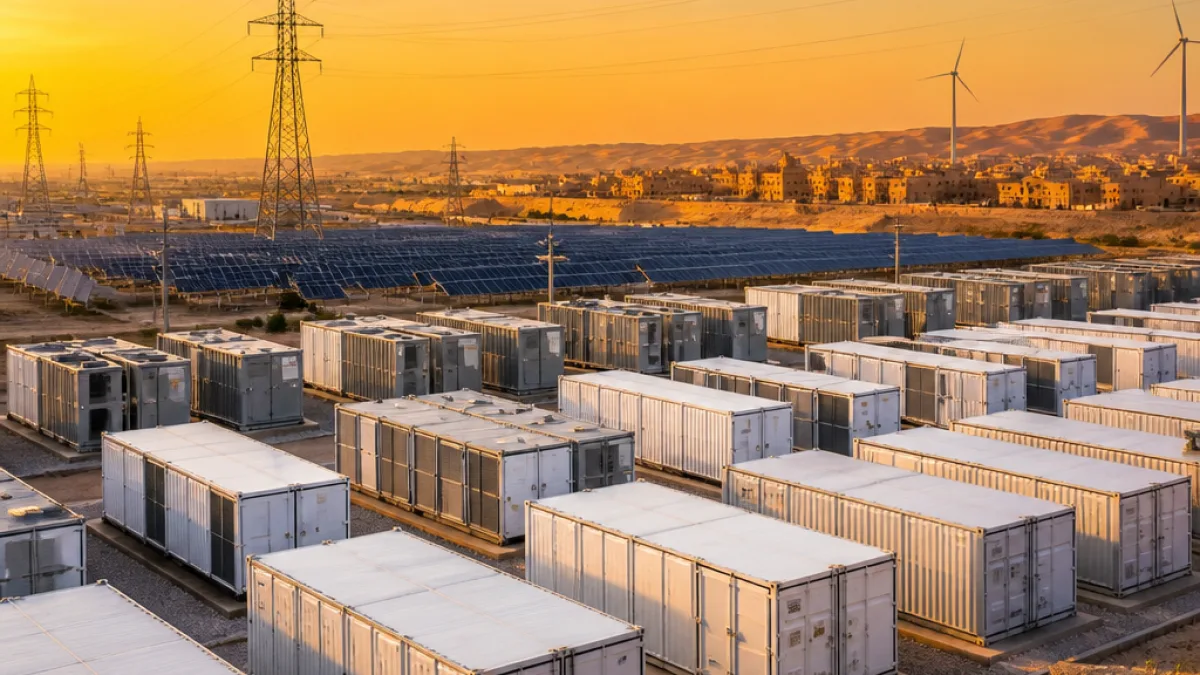
BIKANER: India-based green energy firm Serentica Renewables on Thursday commissioned the first phase of a planned 1GWh Battery Energy Storage System (BESS) at a facility in Bikaner, Rajasthan, the company said. The initial tranche comprises a 200MWh battery installation intended to store excess renewable energy generated during daylight hours for use during periods of higher demand, particularly at night.
The Bikaner project marks Serentica’s entry into large‑scale energy storage targeted at the commercial and industrial (C&I) sector and is described by the company as the first step in a broader battery storage strategy. Serentica said the installation is connected to what it called one of the world’s first "time block Round the Clock (RTC) renewable power" arrangements for industrial users, designed to turn variable renewable generation into steady, continuous supply for energy‑intensive operations.
- Installed capacity (Phase 1): 200MWh
- Overall planned capacity: 1GWh
- Target users: Commercial and industrial sector
According to Serentica, the BESS employs a modular design to allow scalability, operational flexibility and rapid response to changing grid demands. The system has been developed to support grid stability and to help increase the share of renewables within the energy mix.
"Battery Energy Storage Systems will play a defining role in the next phase of India’s clean energy transition by making renewable energy available whenever it is needed," Serentica Renewables CEO Akshay Hiranandani said. "The commissioning of Phase 1 of our 1GWh BESS is a significant milestone in our journey to deliver reliable, round the clock renewable energy for India’s industrial sector."
Serentica said the Bikaner facility is tied into an RTC arrangement that schedules renewable supply in time blocks, enabling industrial customers to receive power across all hours by combining generation and storage. The company presents this model as a way to convert intermittent renewable generation into dependable, dispatchable energy for C&I consumers.
| Item | Detail |
|---|---|
| Phase commissioned | 200MWh |
| Total planned capacity | 1GWh |
| Primary objective | Store daytime renewable power for night‑time/high‑demand use |
Local implications: The commissioning of the Bikaner BESS could influence the regional energy landscape by enabling higher penetration of renewables and offering a solution to supply variability that often affects industrial power procurement. For Bikaner’s industrial units, a time‑block RTC arrangement paired with on‑site or grid‑connected storage may provide more predictable supply and potentially reduce reliance on fossil‑fuel backups during peak hours.
Serentica emphasised that the modular architecture will permit incremental additions to capacity as demand grows and as the company advances its broader storage strategy. The company said the system is designed to respond rapidly to grid conditions, thereby supporting stability and flexibility.
While Serentica framed the Bikaner installation as a milestone for India’s clean energy transition in the industrial sector, the rollout also raises questions that will matter to local stakeholders: timelines for subsequent phases, the scale and nature of local employment during construction and operation, and the manner in which RTC supply arrangements will be priced and regulated for regional consumers. Serentica has described the Bikaner facility as the initial stage of a wider battery storage strategy but has not provided further operational or commercial details in the announcement.
Energy storage is increasingly viewed as central to integrating renewables at scale, and projects such as the Bikaner BESS are being watched by industry and policymakers for their potential to deliver round‑the‑clock renewable energy to heavy electricity users. Serentica’s deployment in Bikaner adds to the growing number of large battery projects being developed across India to support grid balancing and reduce intermittency associated with solar and wind generation.